


Mbala Youth Locked Out of Zambia’s Growth
By Doris Chifunda | Mbala
Zambia is investing heavily in training its young people, but in Mbala, just like across other districts, that investment is not translating into jobs.
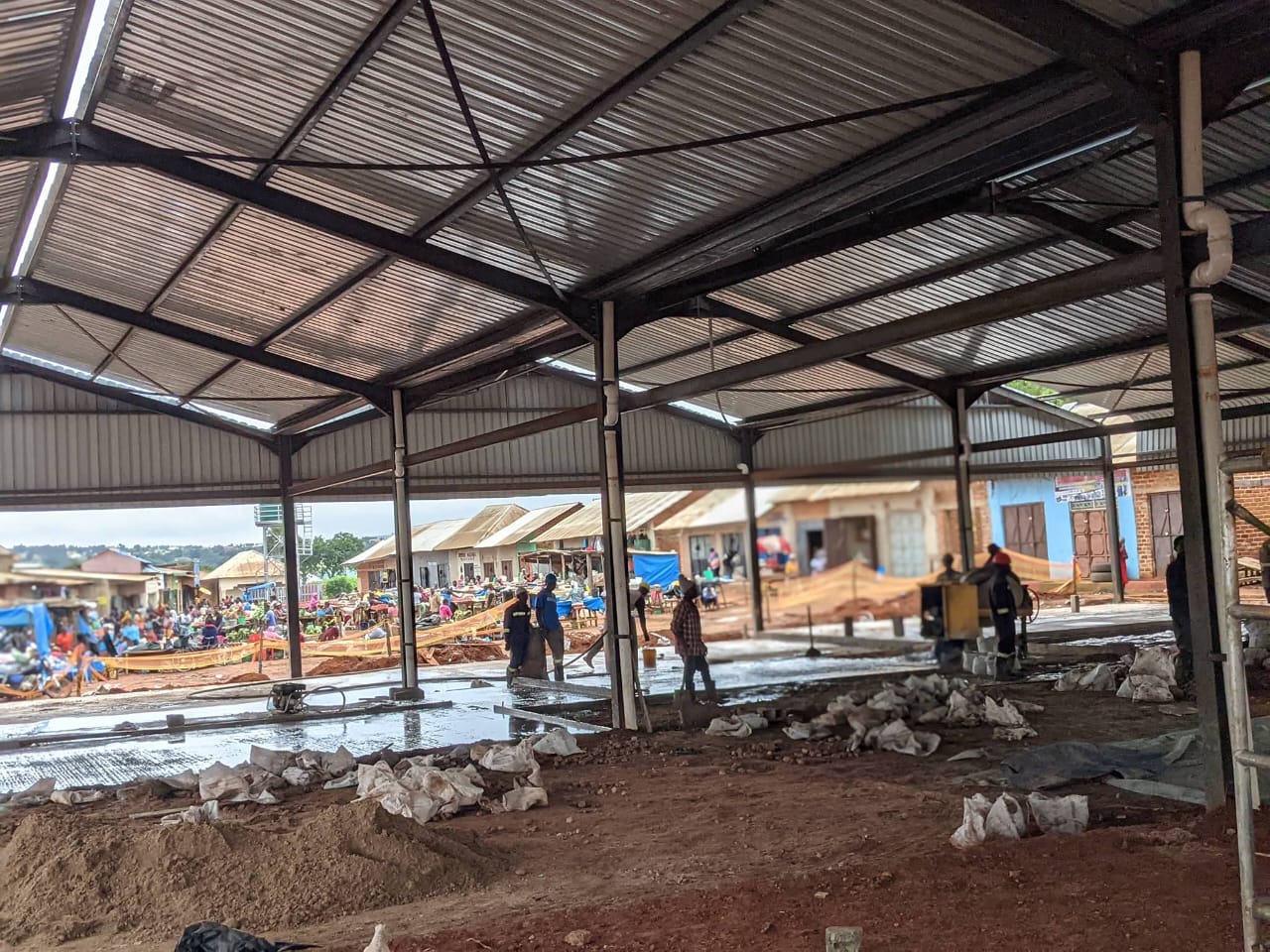
In Mbala, a district in Zambia’s Northern Province, signs of development are hard to miss. At construction sites across the town, bricks are stacked into rising walls. Engines roar back to life in workshops. New structures are steadily reshaping the landscape, signalling growth and investment.
But just a few metres from this activity, a different story unfolds. Young men and women, many of them trained in the very skills now in demand, say they are being left behind.
Hundreds of youths in Mbala have benefited from skills bursaries under the Constituency Development Fund (CDF), receiving training in trades such as bricklaying, carpentry, mechanics, and welding. Yet despite this investment, many remain without jobs.
At one active construction site, workers move quickly, mixing cement and laying bricks under tight deadlines. The work is steady. The demand is visible.
Nearby, however, trained youths say they are not being considered for these opportunities.
Travel Chizu, one of the Mbala youths who was trained at Lukashya Trades Training Institute in Kasama, describe completing his training, receiving certificates, and returning home only to find no pathway into employment. For him, the promise of skills development has not translated into income.
“Some employers in the construction sector refuse to employ us,” he says. “They say we lack experience, they also say some youths report late for work or they miss work without informing the employer.”
Figures obtained from the Mbala Municipal Council show that between 2022 and 2025, 883 youths were sponsored through the CDF skills bursary programme, with close to K5 million in public funds allocated. Yet council records indicate that only about five percent—approximately 45 of those trained—are currently in formal employment.
This gap is not unique to Mbala. It reflects a wider national concern.
At the national level, the Eighth National Development Plan identifies “high youth unemployment” as a persistent socio-economic challenge, placing it alongside poverty and inequality. While the Plan promises job creation through skills development, the situation in Mbala suggests a disconnect. Young people are being trained, but not absorbed into the workforce.
While the plan promises job creation through skills development, evidence on the ground suggests a disconnect between training and employment.
National audits reinforce this concern. The Office of the Auditor General of Zambia, in its 2022 report on local authorities, found that councils “did not maintain adequate records for beneficiaries of bursaries and lacked monitoring mechanisms to track their progress and outcomes,” raising questions about whether public spending on skills training is translating into jobs.
At the same time, employers offer a different perspective.
Some argue that hiring decisions are driven by experience, productivity, and reliability. Others suggest that newly trained youths often lack the hands-on exposure required to perform efficiently on active sites, where time and cost pressures are high.
The issue becomes more complex when some youths allege that jobs are going to workers from outside the district, and in certain cases, from outside the country.
Although an immigration official stated that work permits have not been issued for individuals in construction and technical trades, an investigation by Luswepo Radio found that foreign nationals, mostly from neighbouring Tanzania, are working in the sector. This raises questions, given immigration guidelines requiring employers to demonstrate that the necessary expertise is not readily available locally before such permits are granted.
Immigration Spokesperson Namati Nshinka confirmed that only four companies in the district currently employ foreign nationals, mainly in the agricultural sector.
“These are Patito farms, with three South African nationals on residence permit, then we have Mount Sunzu Coffee Limited, with two Swiss nationals on investor’s permits and one Tanzanian national on an employment permit,” he said. “We have Tangafuti Farming Enterprises Limited, (with) two South African nationals on investments permit and we have got Size Farm, with one South African national on residence permit.”
Labour officials, say the challenge goes beyond hiring practices alone. They point to gaps in practical experience, questions around certification standards, and the need for stronger enforcement of labour compliance. The issue, they suggest, lies within the broader system linking training, industry demands, and employment structures.
“One of the major challenges is that many young people lack industrial experience, even though they have acquired technical skills,” said Michael Chishimba, Acting Labour Inspector for Mbala District.
At the policy level, another question emerges. Once youths are trained using public funds, is there a mechanism to connect them directly with employers? Efforts to establish whether such post-training job placement support exists remain unclear.
Officials acknowledge the importance of monitoring outcomes but also point to structural challenges in ensuring that trained individuals transition into the workforce.
For community leaders like Lightwell Chongo, the consequences are already visible, as youth unemployment, is not just an economic concern. It carries social implications. Without income, he said, many trained youths remain dependent on their families, building frustration, and the deepening the sense of exclusion.
“Some of us are suffering from high BPs, because we can’t sleep all nights, we’re thinking about our children,’’ he said. “There is no good parent who will see sleep, then these individuals themselves, socially, they become a problem. They resort to substance abuse and alcohol, or both.”
Meanwhile, public investment in skills development continues. The Auditor General’s reports do not present a clear, consolidated breakdown of how much was spent on skills development bursaries across Zambia’s constituencies. Instead, the figures are scattered across technical appendices, making it difficult to track how funds were actually allocated and utilised at constituency level.
But across Mbala and many towns of Zambia, the evidence of opportunity is visible in concrete and steel. Yet for many young people equipped with certificates but lacking jobs, that opportunity remains just out of reach.
“What we are asking for, is a chance to prove ourselves,” said Chizu. “If we are given an opportunity, we can also deliver the job and produce quality work, which is required.”
This story was produced by Radio Luswepo in Mbala, and fact-checked by the MakanDay Centre for Investigative Journalism.

Discover more from MAKANDAY
Subscribe to get the latest posts sent to your email.