


By Linda Soko Tembo
Three major agriculture-related Bills currently before Parliament, the Food Reserve Bill, 2025, the Agricultural Marketing Bill, 2025, and the Agriculture Credit and Warehouse Receipts Bill, 2025, are being presented by policymakers and sector experts as the most ambitious overhaul of Zambia’s agricultural legal framework in more than a decade.
Together, the proposed laws aim to restructure how food is stored, marketed, and financed in Zambia.
But while stakeholders say the reforms are long overdue, questions remain about whether new legislation alone can fix structural weaknesses that have persisted across successive administrations.
A sector long defined by production — not profit
For decades, Zambia’s agricultural debate has revolved around a single seasonal headline: how much maize was produced.
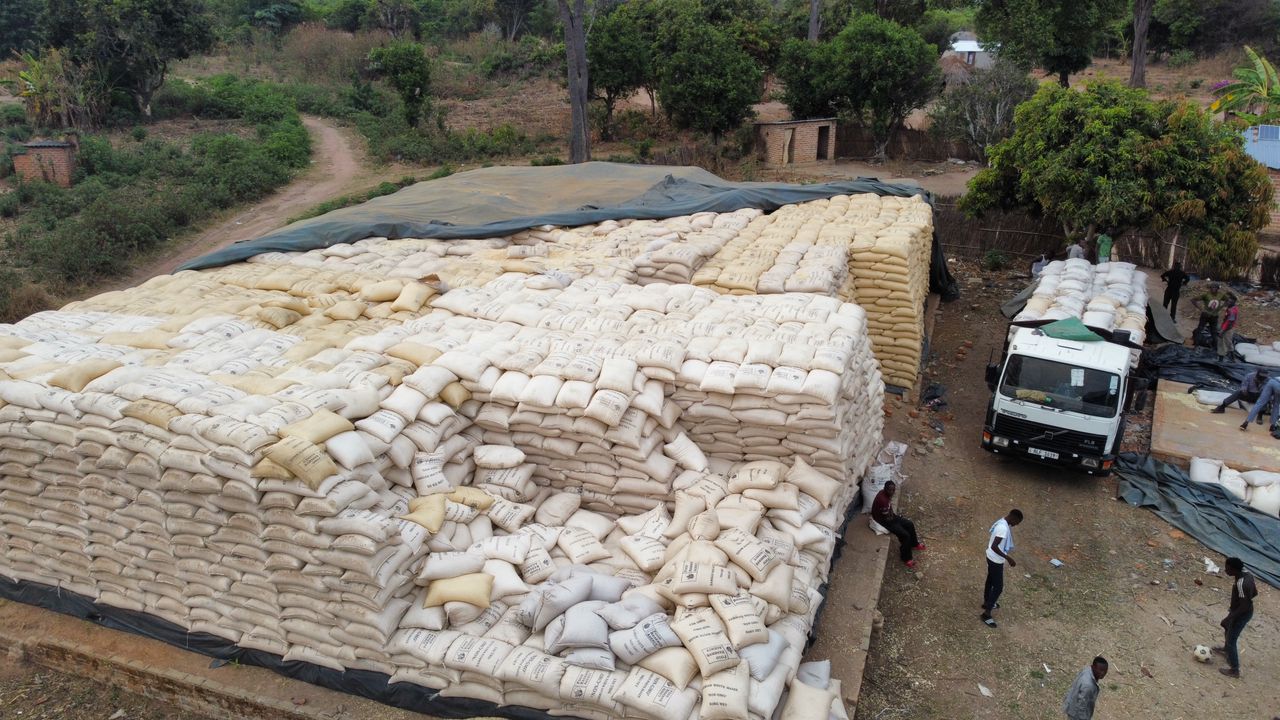
Yet bumper harvests have not translated into stable incomes for farmers. Small-scale producers continue to grapple with volatile prices, delayed payments from state agencies, limited access to affordable credit, high post-harvest losses, and persistent policy unpredictability, structural challenges that undermine productivity, planning, and long-term sustainability.
Agriculture employs a majority of Zambia’s rural population. However, formal lending to the sector has declined in recent years, and market systems remain fragmented.
The three Bills now before Parliament seek to intervene at each of those weak points.
Refocusing the FRA: Food security or market distortion?
At the centre of the reforms is the Food Reserve Bill, 2025, which seeks to redefine the role of the Food Reserve Agency (FRA).
Historically, the FRA has played a dual role, maintaining strategic food reserves while also acting as a dominant maize buyer. Critics argue this has distorted markets, strained public finances, and delayed payments to farmers.
The proposed law attempts to separate strategic food security functions from routine trading activities. It introduces clearer pricing mechanisms tied to market rates and establishes guidelines for stock rotation and emergency releases.
According to the Bill’s memorandum, the objective is to maintain sufficient reserves to respond to emergencies and market shocks while improving cost efficiency and transparency.
However, analysts note that previous reforms to FRA operations have struggled due to political pressure during election cycles, fiscal constraints, and administrative inefficiencies.
The key question is not whether FRA needs reform, it is whether parliament and the treasury will enforce the new rules when political pressures intensify.
Fixing fragmented markets — or adding regulation?
The Agricultural Marketing Bill, 2025 proposes the creation of a Zambia Agricultural Marketing Council and a Market Observatory Unit to collect and disseminate market data.
In many rural districts, farmers negotiate prices without reliable access to market information. Informal middlemen often dominate the system.
Professor Frank Kayula, President of the National Smallholder Farmers’ Association of Zambia, says mandatory registration of grain traders could protect farmers.
“If you don’t register, you don’t participate in the market,” he said, describing the move as a way to eliminate “briefcase traders” who dictate prices without accountability.
The Bill promises advance publication and consultation before market interventions — an attempt to improve predictability.
But some private-sector actors are quietly asking whether new licensing requirements could increase compliance costs or introduce bureaucratic bottlenecks.
Whether the council becomes a facilitative body or a regulatory burden will depend heavily on its design and enforcement.
The Financing Gap: Can Warehouse Receipts Unlock Credit?
Access to finance remains one of the sector’s most persistent barriers.
The Agriculture Credit and Warehouse Receipts Bill, 2025 introduces a legal framework allowing certified warehouse receipts to serve as collateral for loans.
Under the proposed electronic warehouse receipt system, stored commodities would be digitally recorded, improving transparency and lender confidence.
Lance Simwanza, Managing Director of Kudu Consultancy, cites financing data that illustrates the urgency of reform.
“In 2019, 16.4 percent of the agricultural loan book went to agriculture. By 2023, this had dropped to 9.3 percent,” he said, referencing a study conducted for the World Bank. “In 2021, 97.3 percent of agricultural financing went to large-scale farmers, with only 2.7 percent reaching small and medium-scale farmers.”
If implemented effectively, the warehouse system would allow farmers to avoid distress sales at harvest and instead access working capital while waiting for better market prices.
However, Zambia has attempted commodity exchange and structured trading reforms before, with mixed success. Infrastructure gaps, storage capacity limitations, and enforcement weaknesses remain serious constraints. Experts say legislation can create a framework. It cannot build warehouses or guarantee discipline in settlement systems.
Reform is not implementation
At a recent knowledge and information sharing session hosted by the Indaba Agricultural Policy Research Institute (IAPRI), Executive Director Brian Mulenga described the three Bills as a coordinated “full-system reform”.
The ambition is clear: create a more predictable, transparent agricultural system capable of improving food security, stabilising markets, and expanding financing.
However, experts caution that Zambia’s reform history is replete with well-crafted policies that ultimately faltered at the implementation stage. They warn that similar efforts could be undermined by inadequate funding, political interference, overlapping institutional mandates, weak enforcement mechanisms, and the fiscal pressures that often accompany election cycles.
Institutions such as the Zambia Agricultural Commodity Exchange (ZAMACE) have emphasised that certified storage infrastructure, strong oversight, and disciplined settlements will be crucial.
Without adequate financing and administrative capacity, the reforms risk remaining legislative intent rather than economic transformation.
Parliament’s test
As parliament debates the three Bills, the reforms represent more than technical legal adjustments.
They challenge long-standing practices around food reserves, maize marketing, and credit allocation.
If enacted and implemented with fiscal discipline and transparency, they could stabilise farmer incomes, reduce distortions, and expand smallholder access to finance.
But if enforcement falters, or if institutional mandates again blur under political pressure, the agricultural system may continue to struggle despite new laws.
Zambia’s agricultural question is no longer simply about production volumes.
It is about whether the country can move from policy ambition to accountable execution. The Bills promise reform, but implementation will determine whether that promise holds.

Discover more from MAKANDAY
Subscribe to get the latest posts sent to your email.