

Army Action May Stop the Illegalities, but Reform Must Follow
The government appears set to deploy the Zambia Army to confront illegal gold mining at Kikonge in Mufumbwe District, North-Western Province, a move that underscores how badly law and order have broken down at the site. The decision was announced by Army Commander Lieutenant General Geoffrey Choongo Zyeele, who warned illegal miners to vacate the area by next week or face military action aimed at dismantling armed gangs that have taken control of the goldfields.
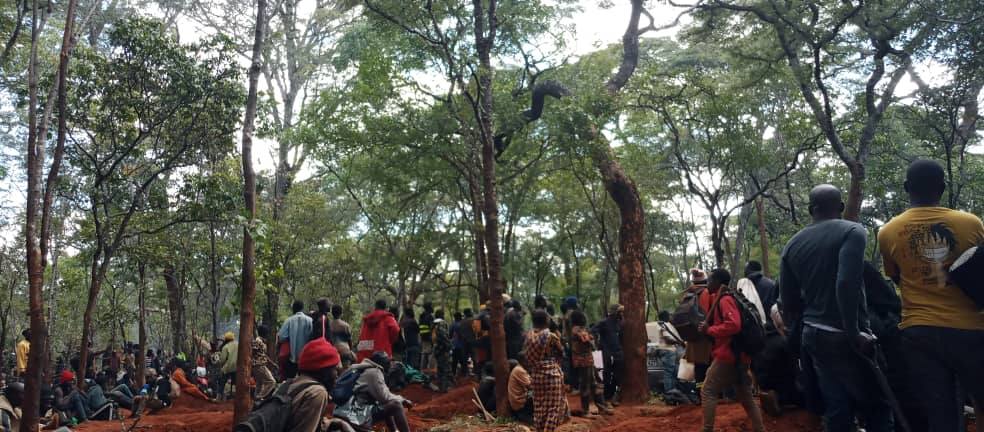
The warning follows months of investigation by MakanDay, working with journalists from Kasempa and Mufumbwe, which uncovered a deepening collapse of authority around the gold rush. The investigation, conducted in September last year, found that Kikonge gold mine, located in the chiefdoms of Chiefs Kasempa and Kizela, had been overtaken by armed gangs, rampant illegal mining, and widespread violence.
Chief Kizela’s spokesperson, Labson Samola Kayombo, told MakanDay that police deployed to the area had failed to restore order, alleging that some officers were instead profiting from the chaos.
“They are involved because they charge people to access the mine,” he claimed, openly calling instead for the deployment of soldiers. When pressed for evidence, Kayombo challenged MakanDay to visit Kikonge and speak directly to residents, many of whom, he said, had repeatedly reported the situation to traditional authorities.
Those allegations are more than claims of misconduct, they mark a turning point in understanding the crisis at Kikonge. What is unfolding there is not simply a story of illegal mining or criminal gangs. It is a case study in state failure, showing how weak governance, under-resourced policing, and rushed resource exploitation can turn a mineral discovery into a national security threat.
The gold rush in Kikonge was never going to be orderly. Tens of thousands of people flooded into an informal mining site on customary land with no licence holder, no infrastructure, and no security plan. Instead of prosperity, the result was violence, armed gangs, deaths, and a collapse of law and order. When the state failed to organise entry, regulation, and protection, criminal actors filled the vacuum.
This outcome is not accidental. Zambia continues to encounter mineral discoveries without the institutional readiness to manage them. Regulation follows chaos instead of preceding it. Kikonge shows what happens when the state arrives late to its own resources.
Policing, which should have been the first line of response, collapsed under the strain.
Despite the deployment of hundreds of police officers, violence persisted and public trust steadily evaporated. Communities and traditional leaders accused some officers of accepting bribes to allow illegal access to the mine, while officers on the ground struggled with severe shortages of transport, food, water, and basic logistical support. In these conditions, enforcement became inconsistent, corruption flourished, and police legitimacy collapsed.
This breakdown has since been acknowledged at the highest level of the police command. In the latest edition of the police news magazine, Inspector General of Police Graphael Musamba concedes that illegal mining in areas such as Mufumbwe has become a serious national concern, fuelling violence, environmental destruction, and public disorder.
He says police, working with other security agencies, are now implementing measures aimed at preventing a recurrence of the chaos, an admission that the earlier response was overwhelmed.
Once policing loses credibility, order cannot be restored by numbers alone. This is why Kikonge became effectively ungovernable. Armed gangs openly threatened police, controlled territory, and dictated access to the mine. The state’s monopoly on force, one of its most fundamental functions, was effectively suspended.
It is in this context that calls for military involvement must be understood. Army deployment in a civilian setting should never be celebrated or normalised. But neither should it be dismissed outright when policing has demonstrably failed.
A limited, clearly mandated military intervention can serve as a necessary reset: disrupting entrenched criminal gangs, stabilising the area so civilian institutions can function again, and signalling that the state has reclaimed authority after months of fragmentation and fear.
This is not an argument for militarising resource governance. It is an argument for recognising that in moments of extreme institutional breakdown, temporary military stabilisation, under civilian oversight, with clear timelines and respect for human rights, may be unavoidable.
The real test, however, lies in what comes after the soldiers.
If Kikonge is merely pacified and then abandoned to the same structural weaknesses, the violence will return. Sustainable peace requires properly resourced policing, serious reform of mining governance, and the meaningful inclusion of traditional leaders in decision-making. Kikonge offers a hard lesson: natural resources do not automatically bring development. Without strong institutions, they magnify inequality, violence, and state weakness. Army deployment may stop the immediate bleeding, but only governance reform can prevent the next crisis.


Discover more from MAKANDAY
Subscribe to get the latest posts sent to your email.


