


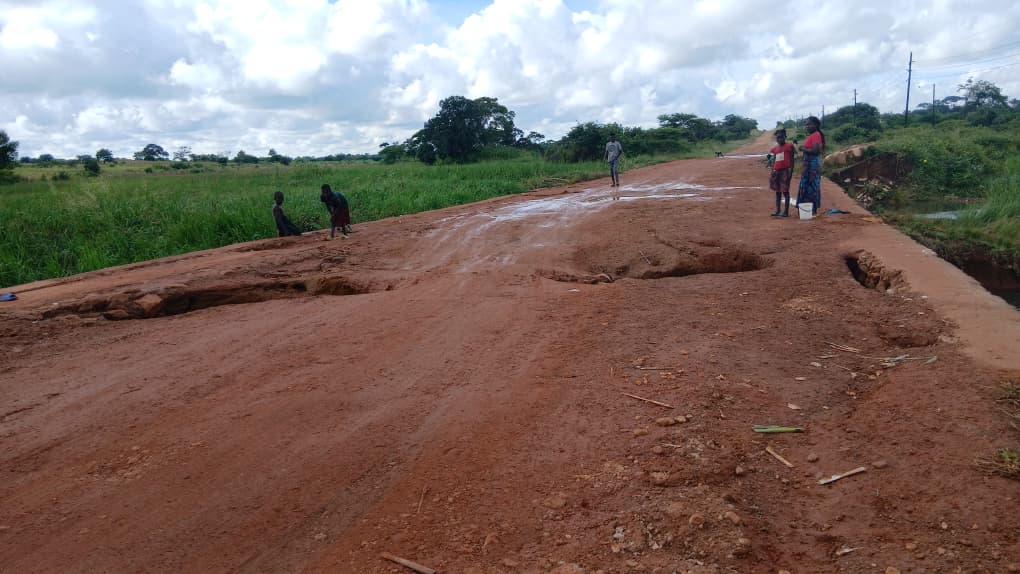
The report we published this week, is not just about a bad road. It is about what happens when infrastructure failure quietly rewrites the lives of citizens far from the centres of power.
At face value, the story documents the deteriorating state of the Chama–Lundazi Road in Eastern Province, a once-critical route now reduced to a “dangerous and unreliable” stretch that disrupts transport, raises costs, and isolates communities. But beneath that lies a deeper truth—this is not a transport story. It is a governance story.
What stands out most is how the road has shifted from being a connector to becoming a barrier. In rural Zambia, roads are not luxuries, they are economic arteries. When they fail, everything else begins to fail with them. The report highlights how communities are effectively cut off from healthcare, education, and markets, especially when it rains. That single detail captures the scale of the problem: a road collapsing into disrepair is, in reality, a system collapsing into neglect.
This is where the story succeeds powerfully. It translates infrastructure into human consequence. Rising transport costs are not just numbers, they are higher prices for goods, missed clinic visits, and children struggling to reach school. Delays are not inconveniences, they are lost opportunities and, in some cases, life-threatening risks.
There is also an uncomfortable historical undertone. Reports indicate that this route has remained largely underdeveloped for decades, becoming nearly impassable during rainy seasons. This suggests a pattern that is all too familiar in Zambia, infrastructure promises made, but never fully realised, especially in rural regions.
The Chama–Lundazi Road reflects a broader national imbalance. While urban centres see periodic upgrades and visible investments, rural connectivity continues to lag behind. Yet it is precisely these rural roads that underpin agriculture, trade, and local economies. When they fail, development does not just slow down, it reverses.
What makes this story even more significant is its timing. Zambia is heading toward a crucial election cycle, where infrastructure is often used as a political talking point. But stories like this expose the gap between rhetoric and reality. Roads are frequently announced, budgeted for, and even launched, but not always completed, maintained, or prioritised where they matter most.
There is also a strategic dimension that cannot be ignored. The Lundazi–Chama corridor links into wider provincial and national road networks, forming part of the broader access routes that connect Eastern Province to the rest of the country. When such links deteriorate, they weaken not just local mobility but regional integration and economic resilience.
What the report ultimately does, quietly but effectively, is challenge the definition of development. It asks: can a country claim progress when entire communities remain physically cut off? Can economic growth be meaningful if it does not reach the people who depend most on basic infrastructure?
The power of this story lies in its restraint. It does not overstate. It simply shows. And in doing so, it forces the reader/viewer to confront a reality that is often ignored, neglect is not always loud. Sometimes it is a road that slowly disappears.
If there is one takeaway, it is this, roads like Chama–Lundazi should not have to become crises before they are fixed. Because by the time a road becomes impassable, the damage has already gone far beyond the surface.

Discover more from MAKANDAY
Subscribe to get the latest posts sent to your email.