

By Clara Chisenga
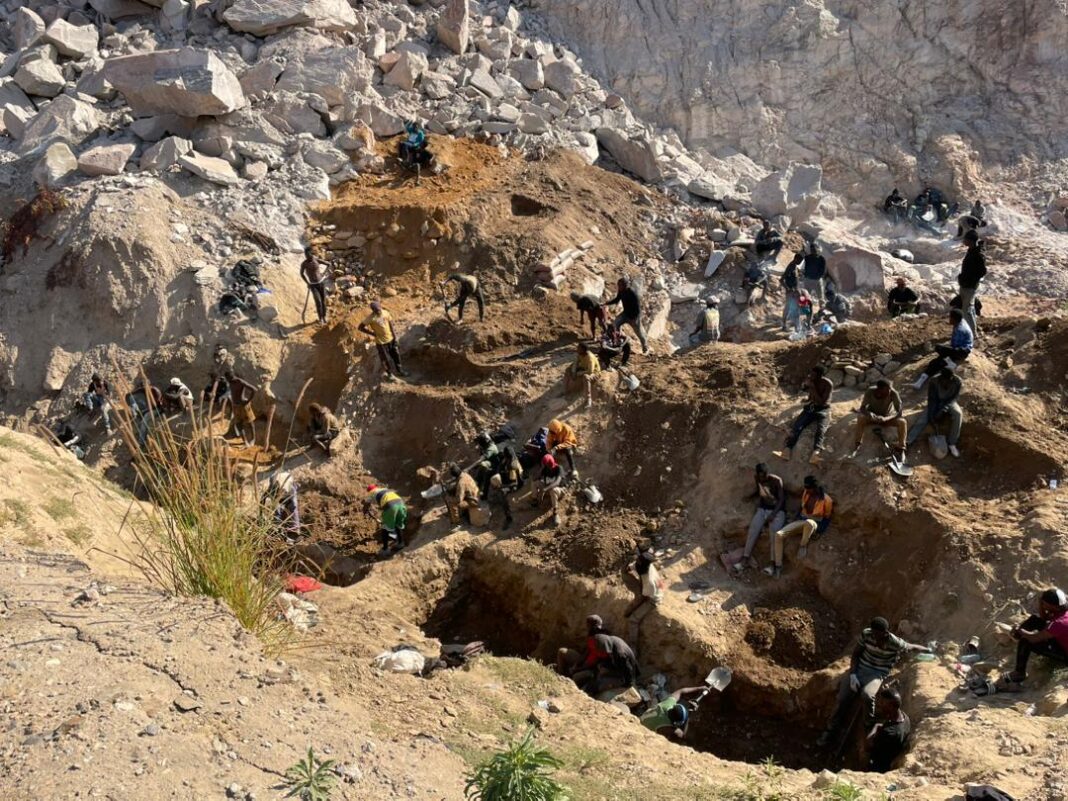
Mining safety experts and small-scale miners have welcomed the Government’s decision to allocate Chingola’s Ore Body (OB) 19 and 22 mine dumps to youth mining cooperatives but caution that operations should not begin until comprehensive geotechnical and occupational safety assessments have been completed.
The calls follow President Hakainde Hichilema’s announcement during a campaign rally in Chingola on July 9, 2026, that the two copper-bearing dumps would be handed over to small-scale miners, commonly known as Jerabos. The President also said Government would provide mining equipment and facilitate access to markets for minerals recovered from the dumps.
The announcement has been welcomed as a step towards increasing Zambian participation in the mining sector. However, experts warn that unless the dumps are first assessed by qualified engineers and supported by robust safety measures, the initiative could expose miners to serious risks, including landslides and rockfalls.
Copper owe dumps have long attracted illegal mining activities. In December 2023, the nearby Sensele dump was the site of a fatal mudslide that claimed 30 lives, highlighting the dangers associated with uncontrolled excavation and unsafe mining practices.
Questions have also emerged over ownership and access to the sites. OB19 and OB22 are located within the Konkola Copper Mines (KCM) mining area. Although KCM—80% owned by Vedanta Resources and 20% by ZCCM Investments Holdings—previously operated in the area, it no longer holds the surface rights to the two dumps.
Some of the dumps are understood to be under private ownership. It remains unclear how the Government intends to facilitate access for the planned mining cooperatives and what arrangements have been made with the current owners.
Geotechnical concerns
Dr Daniel Mabeti, a Tanzania-based Geotechnical and Rock Mechanics Specialist, said the stability of the two dumps should be assessed before any excavation begins.
According to Dr Mabeti, waste dumps are engineered structures whose stability can deteriorate over time depending on their composition, age and previous mining activities. Excavation without proper planning, he warned, could trigger rockfalls, slope failures and landslides.
“From a geotechnical perspective, rockfalls and landslides are possible during mining operations. There is a need to engage qualified and competent engineers to ensure slope stability while maintaining safe mining operations, particularly as these sites transition to small-scale mining cooperatives,” Dr Mabeti said.
He said Government should commission detailed geotechnical investigations to determine the safest methods of extracting the remaining minerals and identify areas that may require reinforcement or restricted access.
Dr Mabeti also advised against manual mining methods at the dumps. Instead, he recommended the controlled use of mechanised equipment such as excavators and dump trucks operated under professional supervision.
“I would recommend the use of excavators and dump trucks rather than relying on shovels and picks, particularly if the operations will involve small-scale miners,” he said.
Small-scale miners welcome the initiative—but urge caution
The Small-Scale Miners Association of Zambia has also welcomed the Government’s decision while stressing that safety training should precede mining activities.
Association National Chairperson Kelvin Tembo said the allocation of the dumps presents an important economic opportunity for youth cooperatives but warned that the project should not repeat mistakes that have contributed to fatal mining accidents elsewhere.
“Once safety measures are in place, we can be confident that the operation will succeed. But if adequate safety systems are not enforced, we risk another mining tragedy. That is something none of us wants,” Tembo said.
He said the planned provision of mining equipment would only improve safety if operators received proper training.
“I hope those who will be operating the machinery are adequately trained. Government should also ensure that small-scale miners receive practical instruction on working safely around heavy equipment and within active mining environments,” he said.
Why the dumps require special attention
Tembo said OB19 and OB22 present different operational challenges from many other mine dumps previously accessed by small-scale miners.
He explained that years of excavation and the manner in which material has accumulated over time may have created unstable sections requiring careful engineering assessment before mining resumes.
“The terrain is different from many other dump sites. Because of the way material has been deposited and disturbed over the years, miners will need to exercise extra caution. Safety must come first,” he said.
Civil society calls for structured training
Development Education Community Project Executive Director Charles Mulila said the initiative could provide meaningful economic opportunities provided it is implemented transparensively and within the framework of the law.
Mulila noted that Zambia’s Minerals Regulation Commission Act, 2025, provides the legal framework for regulating mining activities and emphasised that all operations should comply with occupational health, environmental and mining safety standards.
He said Government should ensure that all participating cooperatives undergo mandatory training before work begins.
“It is Government’s responsibility to ensure that miners understand occupational health and safety requirements as well as environmental and social obligations. Proper training should be completed before any extraction begins so that we avoid unnecessary accidents and loss of life,” Mulila said.
Safety before production
Mining waste dumps often contain valuable residual minerals left behind during earlier processing, making them attractive targets for small-scale mining. However, geotechnical specialists note that the structures can become unstable if excavated without proper engineering controls, increasing the risk of slope failures and rockfalls.
While the Government’s decision is expected to create employment and broaden Zambian participation in the mining sector, stakeholders say the success of the initiative will depend not only on access to equipment and markets but also on rigorous safety planning, technical supervision and adherence to mining regulations.
Several stakeholders interviewed for this story agreed that if proper geotechnical assessments, safety training and operational controls are implemented before mining begins, the initiative could become a model for safer and more sustainable small-scale mining. Without those safeguards, however, they warn that the programme risks exposing miners to preventable accidents.
Clara Chisenga is a journalist from Radio Icengelo in Kitwe. She is currently undertaking a three-month internship at MakanDay after earning third place in the 2025 MakanDay Awards for Investigative Journalism.


Discover more from MAKANDAY
Subscribe to get the latest posts sent to your email.


