

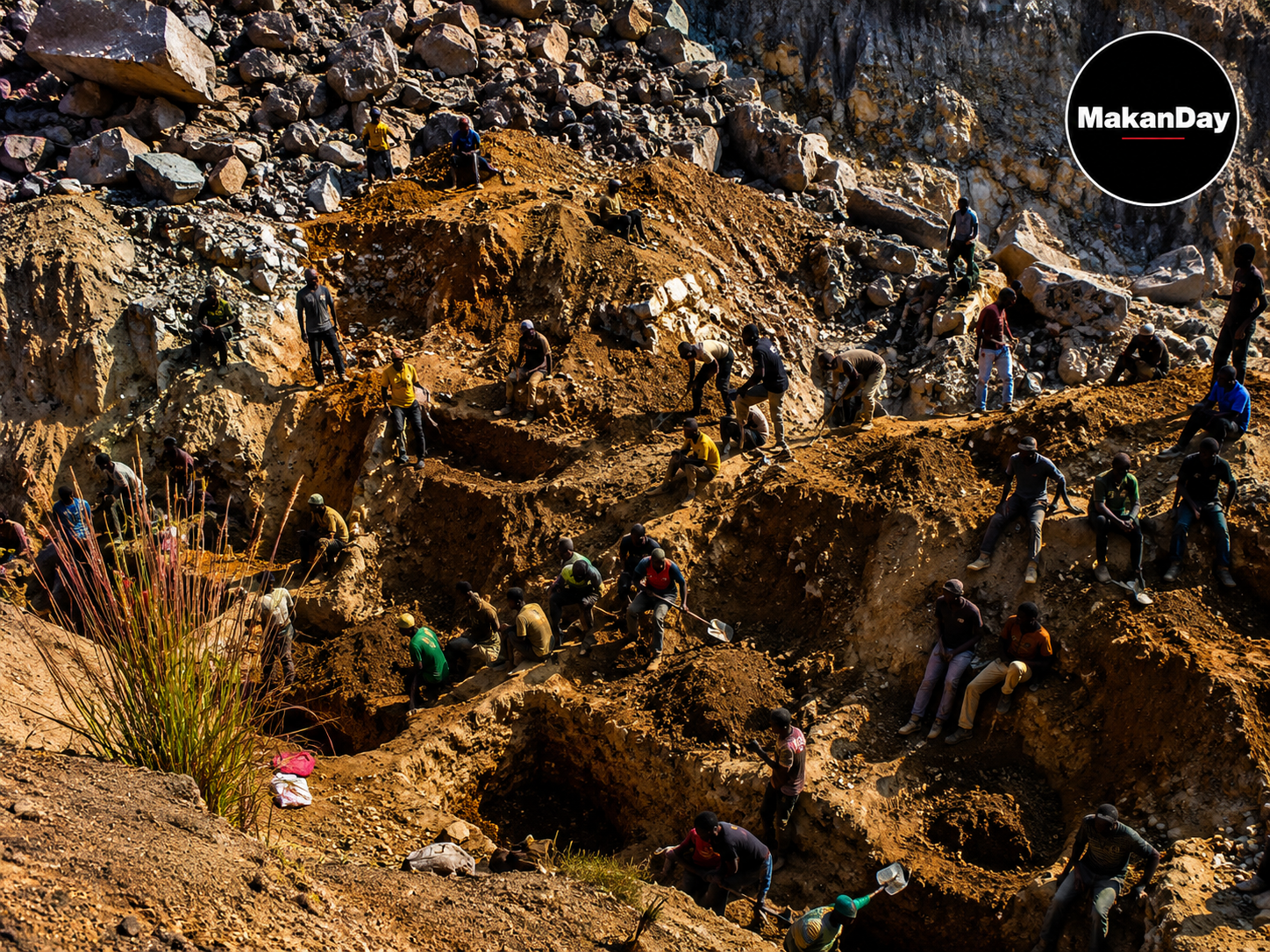
From the Sensele disaster and a disputed US$4 million empowerment fund to the promised handover of OB19 and OB22, decisions affecting artisanal miners have become intertwined with Chingola’s economy. As Zambia votes, could those experiences influence the ballot?
By Peter Chilufya Masongo | Kitwe
When artisanal miners commonly known as Jerabos are working, Gloria Kawemba can see the difference in her sales.
Kawemba, a trader at Chiwempala Market in Chingola, says the miners spend some of their earnings buying food and other goods from local markets, putting money into the pockets of traders and other small businesses.
But when mining activity slows or stops, she says, the effects quickly spread through the local economy.
“When Icilong’oma was closed, it affected sales very much for many marketeers in Chingola,” Kawemba says, referring to one of the dumpsites from which artisanal miners have earned an income.
Now, as Zambia heads to the polls, the economic fortunes of Chingola’s artisanal miners—and the businesses and families that depend on them—are raising an important electoral question: could government decisions over access to mineral-rich dumpsites influence how some people vote?
Copper has shaped Chingola and much of the Copperbelt for decades. Mining and processing have also left behind mineral-bearing waste at dumpsites that have become an important source of income for groups of artisanal and small-scale miners.
On the Copperbelt, some of these miners are commonly referred to as Jerabos. But their relationship with the mines, government and access to mineral-rich sites has been complicated.
That history came into sharp focus after the December 2023 Sensele Mine disaster, in which 30 miners died after being trapped underground.
Access to the site was subsequently restricted, cutting off an important source of income for some artisanal miners. Frustration later spilled into protests, including clashes with police in 2025 as miners demanded access to the site.
A subsequent agreement provided for a US$4 million empowerment fund intended to support 4,000 small-scale miners transitioning away from Sensele.
But a MakanDay investigation published in April found unanswered questions about who actually benefited.
Some registered miners told MakanDay they had received nothing, while no verified public list of beneficiaries or detailed breakdown of payments had been released.
The issue returned to the political stage on 9 July 2026.
At a campaign rally in Chingola, President Hakainde Hichilema announced that the mineral-bearing dumpsites known as OB19 and OB22 would be handed over to small-scale miners, together with mining equipment and support to access markets.
The announcement came barely a month before the general election, bringing the government’s treatment of artisanal miners—and previous promises made to them—back into the electoral debate.
Eugene Mulenga, Zambia National Coordinator for the Sustainable Natural Resources Empowerment Initiative Zambia (SuNREI), believes the treatment of artisanal and small-scale miners could influence voting patterns in Chingola.
Mulenga argues that the industry’s economic importance extends beyond those directly extracting minerals because their earnings circulate through markets, transport businesses and households.
He estimates that when artisanal miners are operating at full capacity in Chingola, their activities inject about K7 million a day into different businesses and families.
MakanDay has not independently verified that figure.
Mulenga also estimates that between 60 and 70 percent of businesses dependent on the miners were negatively affected during periods when Jerabos were prevented from operating, with some businesses closing altogether.
He believes those economic experiences could influence how miners and people whose incomes depend on them approach the election.
For Mulenga, the promised handover of OB19 and OB22 could therefore have consequences beyond the mining sites themselves.
If access is fully realised, he argues, the benefits could spread through Chingola’s wider economy.
But the proposed handover has also raised questions about safety.
MakanDay previously reported that mining and safety experts welcomed opportunities for local participation but cautioned that the dumpsites should undergo appropriate geotechnical and occupational safety assessments before small-scale mining begins.
The warning carries particular weight in Chingola following the deaths at Sensele.
And despite the political attention surrounding artisanal mining, the miners themselves should not be regarded as a single political bloc.
Kelvin Tembo, chairperson of an organisation representing interests in the extractive sector, says small-scale miners are not affiliated with, nor do they owe allegiance to, any particular political party.
He says the organisation’s focus remains securing business opportunities for its members rather than engaging in partisan politics.
Tembo has instead urged miners, particularly young people, to remain peaceful before, during and after the elections.
“There is no need of killing one another. We are all brothers and we have only one Zambia,” Tembo says.
Individual miners, he adds, remain free to support and vote for candidates of their choice.
At Chiwempala Market, Kawemba’s experience illustrates why what happens at the dumpsites does not necessarily stay there.
When the Jerabos earn money, she says, some of it finds its way into local markets and businesses. When that income disappears, traders feel the impact.
For Chingola’s artisanal miners and the communities around them, this election therefore comes after years of shifting access to mineral resources, protests, an empowerment programme whose beneficiaries have faced questions, and now another promise of access to mineral-rich dumpsites.
Whether those experiences translate into support for or dissatisfaction with the government can ultimately only be answered by the voters themselves.
But as they head to the polls, one thing is clear. In a town built on copper, decisions about who gets access to the mineral wealth beneath—and above—the ground have become part of the political conversation.
This story was reported and written by Peter Masongo, a Kitwe-based member of the MakanDay network, and edited by MakanDay.

Discover more from MAKANDAY
Subscribe to get the latest posts sent to your email.


