

As Zambia heads toward 2026, questions over transparency, accountability, and who benefits from “empowerment” are only growing louder.
By Beverly Busanga | Chingola
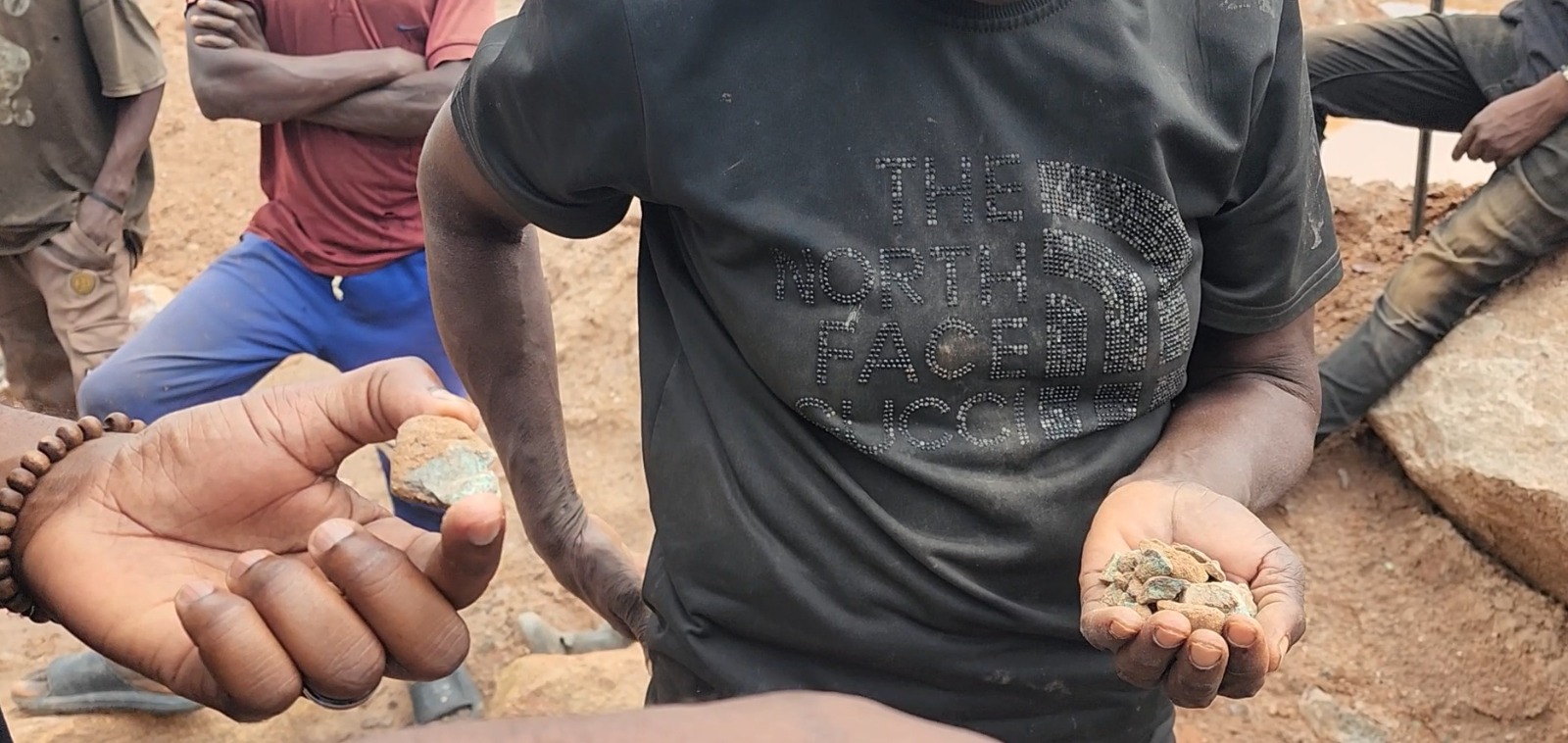
Chingola is a town built on copper. But for hundreds of small-scale miners, locally known as jerabos, Sensele Mine was more than a source of mineral wealth. It was survival.
That survival was abruptly disrupted in December 2023. On December 1, more than 30 illegal miners were reportedly trapped underground at Sensele Mine. In response, government suspended operations, citing safety concerns and the need to review small-scale mining practices.
For nearly two years, the mine remained closed to jerabos.
Frustration quickly grew. On April 3 and again on July 30, 2025, small-scale miners clashed with police during protests demanding access to the site. Many said they had been promised that the mine would reopen after the rainy season. That reopening never came.
By late 2025, mediation efforts led to negotiations between miners and mine owners. On October 26, 2025, representatives of small-scale miners and Chingola Resources Limited signed an agreement, witnessed by government officials.
At the centre of the deal was a US$4 million empowerment fund.
Officials said the money would support 4,000 small-scale miners transitioning away from Sensele Mine. In early January 2026, government confirmed that the funds had been released. Celebrations followed.
But weeks later, a different story began to emerge.
On January 5, 2026, groups of miners gathered at the District Commissioner’s office in Chingola with a simple question: where is our money?
Several miners told the investigation that they had registered for the fund, some more than once, but had not received anything. They were later directed to Rugby Stadium to verify registration lists, where confusion and frustration deepened.
Some claimed that certain individuals had already purchased vehicles using the funds, while others said they had not received even a single ngwee. These claims, however, could not be independently verified.
Leaders of the small-scale miners offered a different perspective. Chairperson Gabriel Chipimo disputed claims of widespread exclusion, while vice chairperson Mike Mushota suggested that some of those complaining may not have been legitimate Sensele workers or may have failed verification processes.
Yet critical questions remain unanswered. No verified public list of beneficiaries has been released. There is no breakdown of payments and no disclosure of how the funds were distributed.
The US$4 million deal raises several key questions. Where exactly was the fund deposited? Was the amount shared equally among the 4,000 miners? How were beneficiaries verified? Was there any government audit? And what oversight mechanisms are in place?
Neither the steering committee nor the company has made public any documentation detailing how the money was allocated.
In a recent interview, Bishop Joseph Kazhila, founder of Life Gospel Fellowship Ministries Church International and a member of the committee overseeing the programme, acknowledged challenges in the disbursement.
He said the initiative “solved very little,” adding that alternative solutions, such as allocating mining dumps to small-scale miners, may have been more effective.
A review of company records shows that Chingola Resources Limited has a complex ownership structure.
The majority of shares are held by corporate entities, with Laric Management-FZCO controlling the largest stake at 85,000 shares. Other corporate shareholders include Beverley Building Limited, Sensele Enterprises Limited, and Supremacy Investments Limited. Additional shares are held by individual investors, both Zambian and foreign, including from the United Kingdom and China. The company was incorporated on June 10, 2022.
For many in Chingola, the empowerment fund was meant to bring closure to a cycle of conflict at Sensele Mine. Instead, a lack of transparency risks replacing conflict with uncertainty.
If 4,000 miners were meant to benefit, how many actually did? And if the funds have been fully disbursed, why do some registered miners say they are still waiting?
While the programme has been presented as an empowerment initiative, findings suggest it may have served another purpose.
Evidence from the investigation indicates that the funds provided by Chingola Resources were intended, at least in part, to facilitate the removal of illegal miners from the pit and pave the way for formal mining operations by the new owners.
Rather than direct empowerment, the programme appears to function as a transition mechanism clearing access for commercial mining activities. For many former jerabos, the promise of empowerment remains uncertain.
The story was produced by Kokoliko FM in Chingola and fact-checked by the MakanDay Centre for Investigative Journalism.

Discover more from MAKANDAY
Subscribe to get the latest posts sent to your email.