


Health officials and advocates warn that diversion of life-saving HIV medication in illegal mining areas could fuel drug resistance, increase transmission, and undermine years of national progress.
By MakanDay
LUSAKA – The illegal sale of antiretroviral (ARV) drugs in mining communities has sparked serious concern among health advocates, regulators and government officials, who warn that the practice threatens to reverse Zambia’s gains in the fight against HIV.
The concerns were raised during a public discussion forum organised by MakanDay Centre for Investigative Journalism in Lusaka, following an investigation into the diversion and street sale of life-saving HIV medication in illegal mining areas.
The forum was attended by health science students from the University of Zambia (UNZA), Chreso University and Lusaka Appex Medical University, who actively engaged panellists with questions on regulation, access to treatment, drug resistance and the long-term public health implications of ARV diversion.
Duba Sakala, an HIV advocate with the Kawama HIV Foundation, said the revelations struck a deeply personal chord.
“Looking at the illegal sale of ARVs, it makes me feel sad, because I am looking at myself,” Sakala said. “I experienced treatment failure before. It was the earlier days of my ART, I didn’t really understand how the drugs were doing and how they were helping me out and at some point, I stopped taking my medication and I experienced treatment failure because of that.”
She said reading about ARVs being sold on the street raised fears about the potential consequences for patients who are not properly monitored.
“So, reading this story made me go back to that time and I am thinking how many of those people are going to experience treatment failure or other complications because they are just buying drugs on the street,” she said.
Sakala also expressed concern over reports that ARVs are being removed from their original packaging and repackaged in plastic bags.
“Now, if you see the way ARVs are packaged, there are always those silicon linings that are supposed to preserve the ARVs,” she said. “For a person like me living with HIV, I need to go for my medicals once a year, so they need to check how my liver is functioning, how my viral load is, how my CD4 count is.”
She warned that individuals buying medication informally may not undergo routine medical checks and may not know the impact the drugs are having on their bodies.
“If somebody is going to buy drugs on the street and they don’t do their medicals, they would not know what effect the medicine is having on their liver. Maybe their liver is not functioning properly,” she said.
Government officials acknowledged the seriousness of the issue.
“At great cost the government and partners have invested much in the fight against HIV, and when we get such reports, it is sad, but we have responded to this,” said Bwalya Agrippa Simunyola, Chief Pharmacist and Coordinator of the Taskforce on the Theft of Medicine at the Ministry of Health.
Simunyola added that the situation is further complicated in areas where illegal mining activities attract undocumented populations.
“When you talk about an illegality, if someone is a prohibited immigrant, or they just sneaked into the country, you don’t expect them to register for health services, and that is our worry,” he said.
He noted that Zambia has made significant progress in achieving high levels of viral suppression among patients, reducing HIV transmission rates. However, he warned that people living outside formal systems of care could undermine those gains.
“If you have people coming in illegally and they’re not on treatment and in these areas prostitution is on the rise, this is something of great concern,” he said.

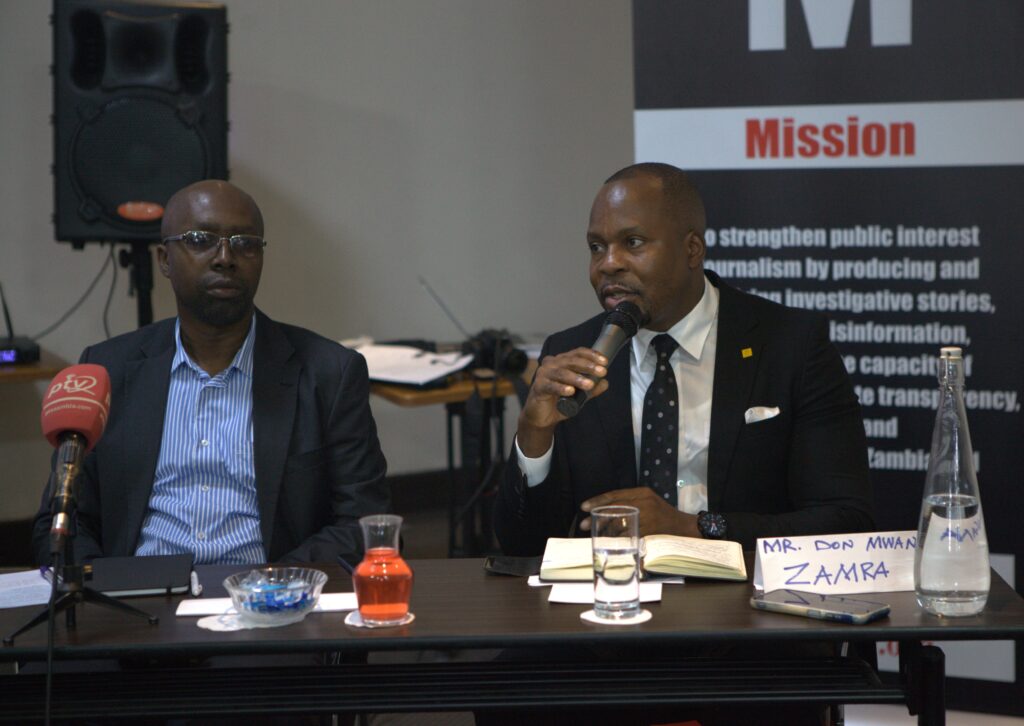
Don Mwangana, Principal Investigations Officer at the Zambia Medicines Regulatory Authority (ZAMRA), said Zambia has made significant strides since ART was first introduced.
“When you look at where we are coming from when ART was first introduced in the country and look at where we are now, significant progress has been made,” Mwangana said.
He stressed that ARVs are not ordinary commodities.
“These are life-saving medications. What is the cost of resistance? It means the drugs that we are using now will not be effective in future. It means people will have to go to third-line, fourth-line treatment and these are very expensive,” he said.
Mwangana also highlighted logistical challenges in addressing illegal sales in remote mining areas.
“There are a lot more resources required to address illegal sale of ARVs in illegal mining sites, because when it is raining those areas are impassable,” he said.
He described the situation as a broader health security threat.
“What is happening in these communities as we read from the (MakanDay) report is actually a health security risk, in my view, because there will be an increase in the viral load and there will be an increase in community transmission of HIV,” Mwangana said.
Kunyima Lifumbela, Executive Director of Trides24 Foundation Zambia, an HIV advocacy organisation, warned that allowing ARVs to be sold illegally risks undoing years of progress.
“If ARVs are being sold in illegal mining sites, we are taking steps back in the response to HIV treatment,” she said, adding that addressing issues of access to proper treatment remains critical.
Throughout the discussion, students from UNZA, Chreso and Appex University pressed panellists on enforcement mechanisms, public awareness, and how future health professionals can contribute to safeguarding the integrity of Zambia’s HIV response.
The forum concluded with calls for stronger oversight, increased resources, and coordinated action among health authorities, regulators, civil society and communities to curb the illegal diversion of life-saving medication and protect public health gains.


Discover more from MAKANDAY
Subscribe to get the latest posts sent to your email.


