

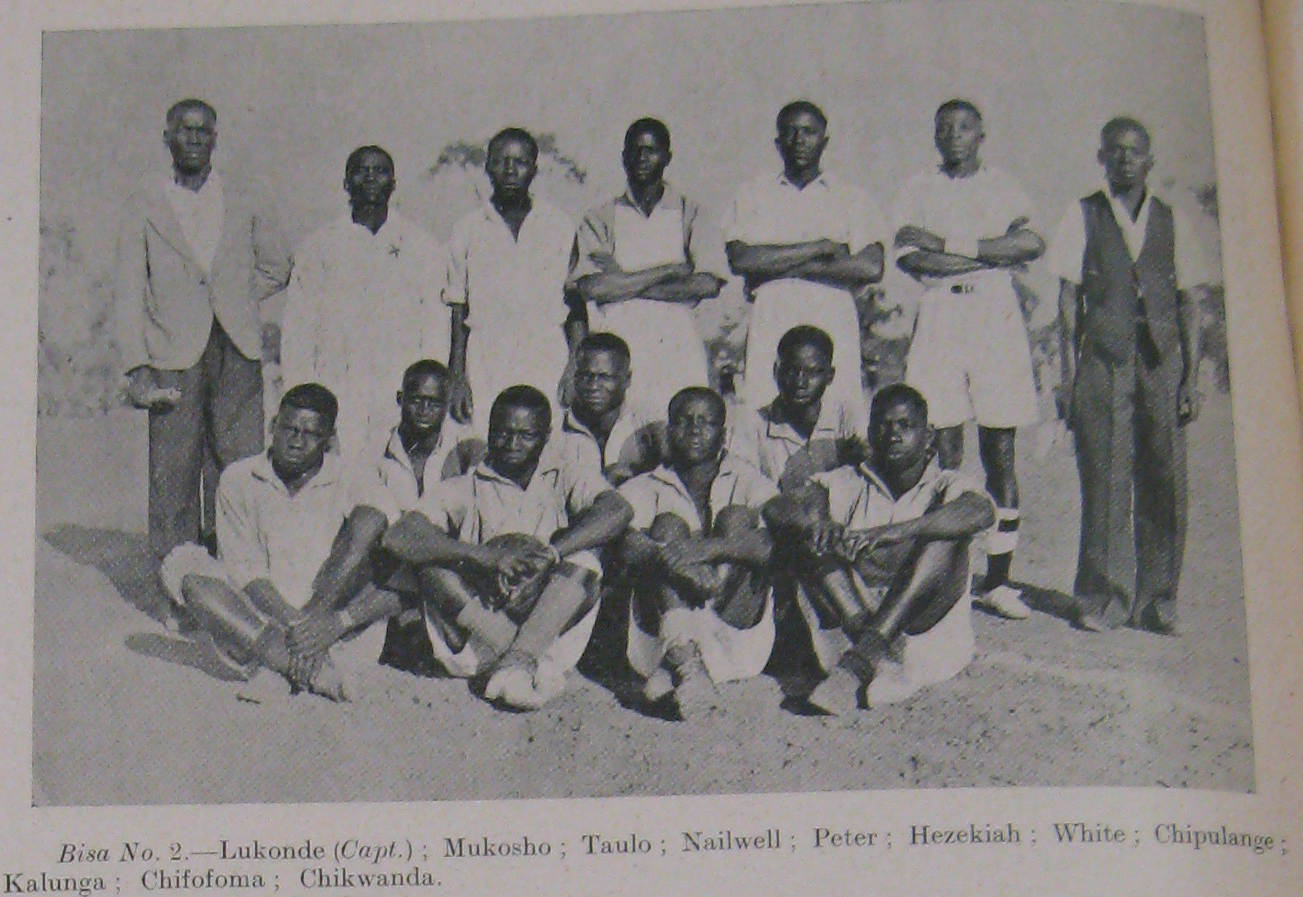
Long before Zambia gained independence in 1964, football was already doing more than entertaining crowds on the Copperbelt. It was bringing African mineworkers together, breaking ethnic barriers, challenging colonial divisions and helping shape a new sense of identity and belonging.
What began as a game introduced by European settlers became a powerful expression of African culture, solidarity and, eventually, political consciousness. From the mining compounds of Luanshya and Mufulira to packed football grounds in Kitwe, African players and administrators transformed football into a platform for community organisation and leadership.
But how did a colonial pastime become an important part of Zambia’s struggle for identity and self-determination?
In this historical account, Hikabwa D. Chipande traces the rise of football on the Copperbelt and explores how African mineworkers made the game their own, long before independence.
First published in 2014 by The Bulletin & Record magazine, the article is republished today by MakanDay Weekly, offering readers an opportunity to revisit an important chapter in Zambia’s sporting and social history.
How football became a leading form of popular black culture & identity
By Hikabwa D. Chipande
It is 20 minutes before fulltime in a 1962 semi-final Castle Cup match between Roan United and Nchanga Sports at Scrivener Stadium in Kitwe. Supporters of both teams are starting to lose patience. Roan United supporters console themselves by chanting “Roni iwine chungulu” (Roan wins in the evening, meaning the dying minutes of a match).
As the clock winds down, John Mulenga, popularly known as “Ginger Pensulo” after Ginger Stevenson, a European of Nchanga Sports Football Club, collects a loose pass from the midfield. He dribbles past three defenders and fires a sizzling shot that the Nchanga Sports goalkeeper cannot stop. Roan United supporters celebrate the game-winning goal by chanting: “Ginger Pensulo, Ginger Pensulo, Ginger Pensulo.” Roan United had made it to the prestigious Castle Cup final.
Pensulo spent his entire adult life working at Luanshya’s Roan Antelope Mine. He worked as welfare assistant in the African Welfare Department, captained Roan United from 1965 to 1967, and later coached the club. He still lives in Luanshya and remains one of the most celebrated football stars locally and across Zambia.
Pensulo’s success was built on the rich football culture that developed on the Copperbelt beginning in the early 1920s. Social historian Peter Alegi points out that when Europeans introduced football in Africa in the second half of the 19th century, Africans were not passive victims on whom football was imposed; rather, local men (and perhaps some women) enthusiastically took to the game because “it was fun inexpensive, and relatively easy to play.”
Drawing on archival documents, press articles, and oral sources, this article explores the emergence of football on the Copperbelt. Specifically, it explores how newly urbanised African miners appropriated the game from European colonisers and transformed it into a leading form of black popular culture. It argues that when the colonial state and mining authorities introduced football on the Copperbelt through post-war welfare schemes in order to “detribalize” urban Africans and control them, Africans had already appropriated the game and made it their own.
Urbanised Africans on the Copperbelt, in other words, took advantage of the welfare system to develop and enjoy football in mining communities and to challenge colonial authorities to deliver quality social services to the people. I argue further that football gave Africans an opportunity to create new urban networks, build new community identities and meaning to their social lives.They also used the game to build camaraderie and social exchanges with fellow colonised Africans in neighboring states through football tours. Eventually, football also enabled some men to gain leadership experience that would be crucial to the broader Zambian struggle for political independence.
The magnetism of football in welfare centres led to the emergence of several competing local football clubs formed by miners and their dependents. The football clubs both symbolised and embodied the start of a new life for urbanised, wage-earning Africans.
As in the mines of South Africa, workers in colonial Zambia “adopted British soccer to cope with the dislocations of urbanisation and build vital alternative networks” in urban, industrial settings. This social and economic change from rural to urban also required men to re-create their identities and communities, which most did by relying on their ethnic and cultural links. For those who were miners, it meant that they had to juggle their mining jobs and football.
Dickson Makwaza, the longest-serving Zambian national football team captain (1967-1975), told me how in the early 1960s as a young miner he shuffled from the mineshaft at Mufulira Copper Mines to Mufulira Mine Football Club grounds. Around this time, mining companies provided their football-playing employees with transport to and from the mines to the sports fields, but little else.
African clubs were self-supporting. They raised funds through membership fees, gate takings, and selling refreshments at big games. Sometimes a club chairman would use his money to purchase jerseys and other equipment from a local shop. On other occasions, chairmen made loans to the club to be repaid later out of money won in competitions, fundraising, gate takings, and even selling alcohol and foodstuffs during matches.
Football players usually bought their own second-hand boots from Europeans until the mid-1960s after independence when Copperbelt welfare programmes started supporting athletes with sports equipment such as boots and jerseys.
As competitive football began to thrive in African communities on the Copperbelt, the Governor of Northern Rhodesia decided to start sponsoring the Governor’s Cup. In the past, the Governor had always attended the Cup final with an entourage of colonial administrators and mining company officials. Qualification matches for the Governor’s Cup were played in each mining town (district), and then the winners played inter-district to decide the semifinalists and finalists.
Other important cup competitions at the time included the Colony Cup, Spearpoint Cup, and the Waddington Cup, which was named after Sir John Waddington, Governor of Northern Rhodesia from 1941 to 1947.
The growing passion for the game among Africans and colonial investment through the Beer Hall Amenities Fund led to the opening in 1948 of the Copperbelt African football league, with clubs from Ndola, Kitwe, Luanshya, Mufulira and Chingola.
The newly formed league required each district to have two clubs. At Roan Antelope, the best players were selected to form one big club called Roan African Football Club (Ginger Pensulo’s team discussed earlier). Clubs in Luanshya’s government locations formed Luanshya Buffaloes. The First Division Copperbelt Football clubs featured Mufulira Tigers, Mufulira Styles, Chingola Dynamos, Chingola Orients, Kitwe Lions, Kitwe Tigers, Ndola Home Defenders and Ndola Black Follies. The Copperbelt African Football league increased competition and the demand for talented football players regardless of their ethnic affiliation leading to the ending of ethnic football in Copperbelt African mining townships.
Talented football players were highly sought by each club to strengthen and dominate the district and the province. The new clubs represented mining companies, mining compounds, government locations, councils, towns and districts.
Players in these new clubs were predominantly talented low-and middle-income miners, clerks, council workers and teachers who resided in either mining townships or government locations. By the end of 1958, the league had expanded and the Copperbelt was divided into two regions with 12 clubs competing in each region. The first league was made up of clubs such as Mufulira Mine, Luanshya All Blacks, Nchanga Mine, Kitwe Lions, and Ndola Black Follies and the second league was made up Rhokana United, Roan Mine, Mufulira Black Pool, Bancroft Mine, Chingola Orphans, and Ndola.
One of the very first international matches among Africans in Northern Rhodesia took place in connection with the first known “unofficial sub-Saharan soccer championship” in 1950 in Elisabethville (Lubumbashi). To help defray travel costs for the Johannesburg Bantu Football Association (JBFA) team’s trip to the Belgian Congo, South Africa’s white authorities scheduled matches on the Copperbelt and in Bulawayo, Southern Rhodesia. After the tournament in Elisabethville in July 1950, the South Africans travelled by rail to the Copperbelt. There, the JBFA team beat a Chingola select side, and then played a Copperbelt select side at Scrivener Stadium in Kitwe, as well as other matches in Mufulira, Ndola, Luanshya, and in Lusaka on July 30, 1950 before making their way to Bulawayo.
Despite losing most of the matches against the visiting South Africans, the Copperbelt teams enjoyed the experience so much that the CAFA invited the JBFA back. The South Africans returned in January 1959 and contested several matches in Copperbelt towns and Lusaka, winning most of them. The South Africans returned the favor and invited the Copperbelt select team to visit Transvaal towards the end of 1959. The CAFA made their first tour of Transvaal in 1959, where Ginger Pensulo emerged top scorer of the tour.
In 1960, the association eventually split into two separate soccer and athletics bodies — the Copperbelt African FA (CAFA) and the Copperbelt African Athletics Association. CAFA became affiliated to the Northern Rhodesia African Football Association and became the ruling body of the local game from Kapiri Mposhi to the border with Katanga. Around the same time, CAFA conducted elections and elected R. Howie as president, Jimmy Fleming as chairman, Ben Evans as vice-president, and Tom Mtine—the only African—as secretary.
The institutional reorganisation of Copperbelt African Football brought a lot of positive changes. The association now required one European and one African to represent each of the six districts. This change opened doors for Africans like Tom Mtine, a renowned Ndola based businessman, to be elected to the post of secretary of the association. It also allowed other African football administrators like Musa Kasonka, a former goalkeeper for Nchanga Eleven Wise Men, to be elected as vice-chairman of the association. Kasonka was also team manager for the CAFA select team that toured Johannesburg in 1959.
It was not common around this time for an African to acquire a leadership position in an organisation with Europeans. In fact, CAFA was one of the first institutions in colonial Northern Rhodesia to open leadership positions to both Africans and Europeans. This transformation gave Africans a taste of equality and strengthened self-confidence for asserting political independence.
In the immediate post-war period, what historians often call the “Second Colonial Occupation,” African football on the Copperbelt overshadowed the game in the rest of Northern Rhodesia. Copperbelt teams travelled widely to compete in international matches that, among other things, built camaraderie and solidarity with fellow colonised Africans in neighboring countries. As the launch in 1962 of a non-racial semi-professional National Football League would illustrate, the Copperbelt would continue to dominate Northern Rhodesian/Zambian football for decades to come.

Discover more from MAKANDAY
Subscribe to get the latest posts sent to your email.


